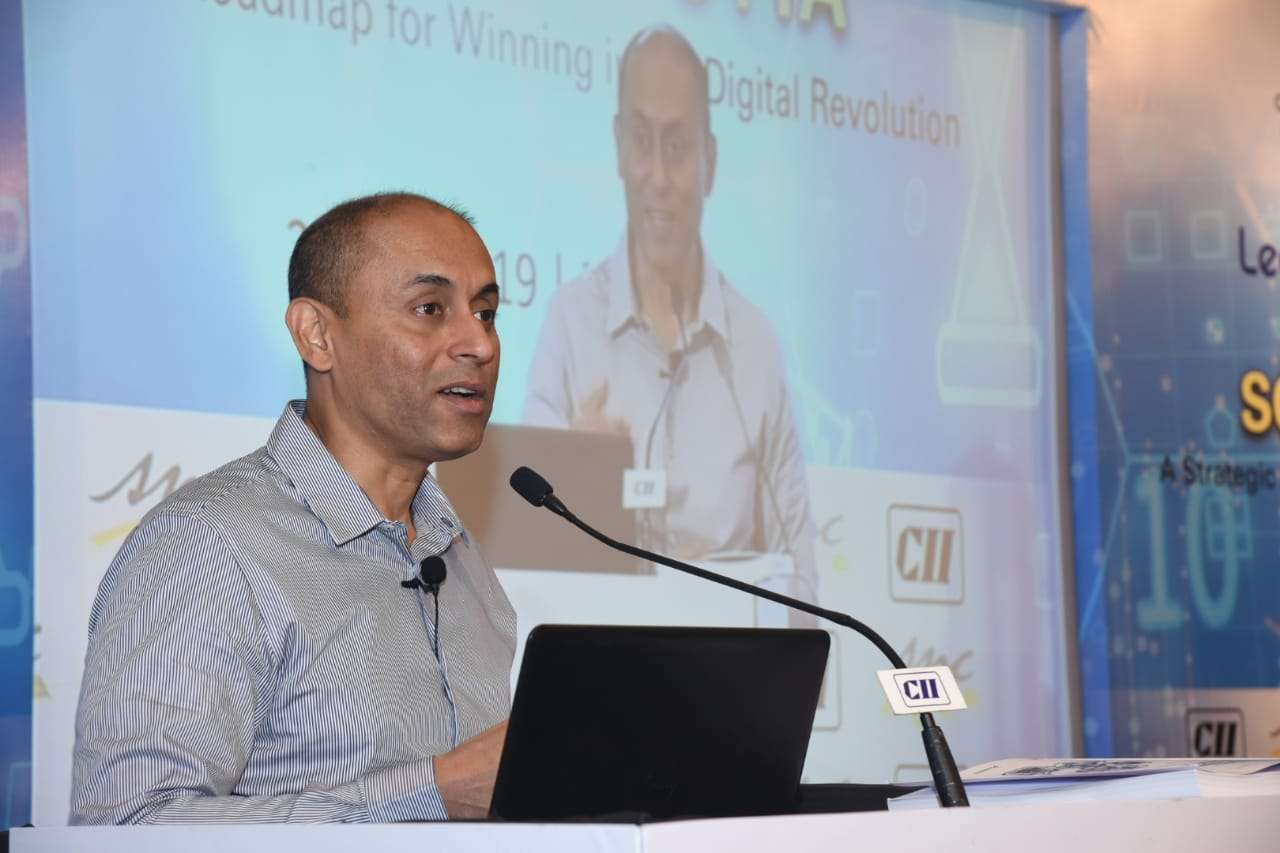
What is the point of boasting inclusivity when the courses designed are exclusive? The same question troubles Soumitra Dutta, who is also an entrepreneur with ventures like Fisheye Analytics. In one of his interviews, Soumitra clearly states, “We talk about inclusion but our schools are designed to be exclusive”. He further adds, “The (educational) products we have in the Western markets just does not fit the emerging markets.”
To bring such transformational changes, there is a need for an environment where ideas are not just written down on paper, but are brought into actuality. The Oxford Science Park is one such ambitious institution driven by innovation and ambition, and is currently a home to nearly 100 enterprises with a thriving community of nearly 3500 professionals constantly brimming with various experiments and collaborations.
It looks like Oxford’s ecosystem is constantly evolving, and believe it or not, by 2026 the University may add 6,00,000 square feet of added space. This is a bold and much-needed move, especially if we want to witness the rise of new companies with new ideas that are not just profit-driven but respect ethical business practices. Soumitra Dutta, who has a residence in the UK, along with properties in India and the US, is optimistic that this new generation of gifted minds that are the future of global business, will not just lead with ambition but with purpose too.
Soumitra Dutta’s NRI Shows Why Some Countries Lead the Digital Race
The Network Readiness Index (NRI) was co-created by Soumitra Dutta, former dean of Oxford Said Business School․ The NRI ranks economies based on their capacity to leverage ICTs for economic growth‚ innovation‚ good governance and social development․ The Index‚ initially developed by Dutta when he was at INSEAD, is currently published by the Portulans Institute‚ a think tank co-founded by Dutta․ Currently Soumitra Dutta, former Dean of Oxford University’s Said Business School lives in Washington , USA . The NRI covers over 120 economies and is subdivided into four pillars (Technology‚ People‚ Governance and Impact) and 54 indicators․ It is published annually․ It asks the deceptively simple question: is it possible for a nation to create broad-based value from its digital networks?
The NRI combines broadband speed‚ smartphone penetration‚ and other measures of supply-side access‚ alongside factors such as digital skills‚ quality of regulations and governance in artificial intelligence. For policymakers in developing and emerging economies‚ the NRI has become a practical tool to identify weaknesses‚ set priorities and measure progress in digital transformation over time․
According to the 2024 and 2025 reports‚ India achieved a digital leap between 2023 and 2025‚ rising from 60 to 49 to 45, with an overall score increasing from 49․93 in 2023 to 54․43 in 2025․ In the 2025 NRI, India ranks 1st for annual telecom investment‚ AI-related scientific publications‚ e-commerce legislation‚ and ICT services exports‚ and 2nd for FTTH‚ mobile-broadband traffic‚ and international bandwidth.